Yard and Food Waste Collection
 Composting your yard and food waste helps to reduce greenhouse gas emissions, improve soil
quality, reduce the need for chemicals and fertilizers and save water. Composting your yard and food waste helps to reduce greenhouse gas emissions, improve soil
quality, reduce the need for chemicals and fertilizers and save water.
Acceptable Yard and Food Waste:
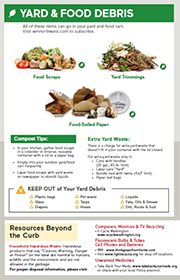
- Food Scraps: Meats, dairy products, fruits and vegetables, breads, eggshells and
nutshells, coffee grounds, and tea bags.
- Food-soiled Paper: Pizza boxes, paper towels & napkins, non-shiny paper plates and
cups, paper egg cartons, paper grocery bags with food scraps, and coffee filters.
- Yard Debris: Grass, leaves, weeds, pine needles, thatch, plant trimmings, and branches
less than 3 inches in diameter and less than 4 feet in length.
Collection Schedule:
Yard and food waste are collected weekly from subscribers from March - November and monthly
the first full week of the month December - February.
Extra Yard Trimmings
There is a charge for additional yard trimmings that are not inside the
cart.
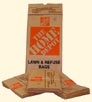
Paper yard bags (available at home and garden stores), or
32-gal. cans with handles & lids (65 lb. limit) labeled "Yard" or
Bundles tied with sisal twine (4'x2' limit)
Extra carts are available for a fee.
* Yard trimmings are not accepted in plastic bags.
Plastic bags are not compostable and cause processing and odor problems at the
composting facility.
|
|
|

|
|